

Summarised By-
Dr Arihant Jain, MD | lifeonthefrontline.com
Instagram: @humans.of.em
X | Linkedin | ORCID
————————————————————————
The new global consensus on acute-on-chronic liver failure and what it means for clinicians in the ED, wards and ICU.
A patient with cirrhosis presents with fever, hypotension and altered sensorium. Another develops jaundice, acute kidney injury and worsening encephalopathy during hospitalisation.
These are not simply episodes of worsening liver disease. They may represent acute-on-chronic liver failure (ACLF), a life-threatening condition in which an acute insult leads to liver failure and potentially multiple organ failures.
Until now, different regions have used different definitions and diagnostic criteria for ACLF, making it difficult to compare patients, research and outcomes.

In 2026, five major liver societies—EASL, AASLD, APASL, ALEH and SOLDA—came together to establish a global consensus.
Here are the key updates every acute-care physician should know.
1. What exactly is ACLF?
The new consensus provides a simple framework built around three components:
Advanced chronic liver disease: fibrosis stage F3 or greater.
Liver failure: bilirubin ≥5 mg/dL AND INR ≥1.5.
Extrahepatic organ dysfunction or failure: involving the kidneys, brain, circulation or respiratory system.
Importantly, ACLF can occur even in patients who have never previously experienced ascites or hepatic encephalopathy.
The consensus recognises two types:
Type A: No previous decompensation. New ascites and/or hepatic encephalopathy develops at presentation or within 2–4 weeks of liver failure.
Type B: The patient has previously decompensated cirrhosis.
Remember: ACLF is not restricted to patients with a long history of decompensated cirrhosis.
2. How do we grade ACLF?
The severity of ACLF depends on the number of extrahepatic organ failures.
Grade 1
Liver failure + one extrahepatic organ dysfunction
Grade 2
Liver failure + one extrahepatic organ failure
Grade 3
Liver failure + two or more extra-hepatic organ failures
The important organ failure thresholds are:
Kidney: KDIGO stage 2–3 AKI or new requirement for dialysis.
Brain: West Haven grade 3–4 hepatic encephalopathy or mechanical ventilation for encephalopathy.
Circulation: Requirement for vasopressors due to circulatory failure.
Respiration: Mechanical ventilation for respiratory failure, PaO₂/FiO₂ ≤225, or SpO₂/FiO₂ ≤244 when PaO₂/FiO₂ is unavailable.
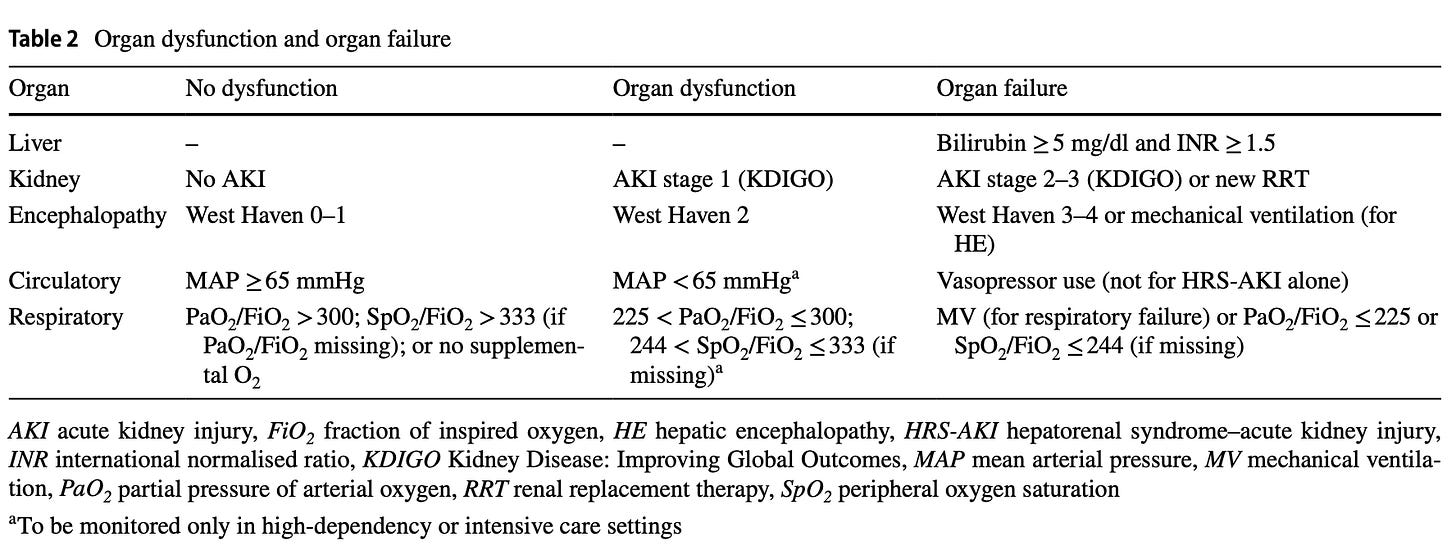
Table 1. From the original article from the Hepatology International Journal.
Note: Circulatory and respiratory dysfunction require monitoring in a high-dependency or intensive-care setting. Vasopressors used for HRS-AKI treatment alone do not count as circulatory failure.
Why does grading matter? Higher ACLF grades are associated with progressively higher short-term mortality. Recognising evolving organ failure early is therefore crucial.
3. What should we do in the first few hours?
The initial approach is similar to managing any critically ill patient but with particular attention to the precipitating cause and evolving organ dysfunction.
Look for the trigger:
Infection, including spontaneous bacterial peritonitis
Alcohol-related hepatitis
Viral hepatitis or reactivation
Drug- or herb-induced liver injury
Gastrointestinal bleeding
Assess every organ system:
Mental status and airway protection
Urine output and renal function
Blood pressure, perfusion and lactate
Oxygenation and respiratory effort
Do not miss infection. The consensus recommends a full septic work-up, including diagnostic paracentesis, blood cultures, urine culture and sputum culture where appropriate. Early appropriate antibiotics may improve survival.
Resuscitate carefully:
Prefer balanced crystalloids.
Use albumin for established indications such as large-volume paracentesis, SBP and HRS-AKI—not routinely for every patient in shock.
Use norepinephrine as the first-line vasopressor when hypotension persists despite adequate volume resuscitation.
Target MAP ≥65 mmHg.
Consider vasopressin as a second-line agent and IV hydrocortisone when norepinephrine requirements are escalating.
4. Important ICU considerations
A few recommendations deserve particular attention:
Hepatic encephalopathy and airway
West Haven grade 3–4 or GCS <12 indicates severe neurological impairment and increased aspiration risk.
ICU management is recommended where possible.
GCS <9 should prompt consideration of intubation.
Mechanical ventilation
Use lung-protective ventilation: tidal volume 4–6 mL/kg predicted body weight and plateau pressure <30 cm H₂O, where possible.
HFNC may be considered in alert patients who can protect their airway, with close monitoring.
Renal failure
Consider renal replacement therapy in HRS-AKI patients who have failed medical treatment and are listed for, or being considered for, liver transplantation.
Coagulation
INR does not fully reflect haemostatic status in cirrhosis.
TEG/ROTEM may provide a better assessment of dynamic haemostasis, although further validation is needed before routine adoption.
5. Treat the cause not just the organ failures
Some important aetiology-specific recommendations include:
Alcohol-related hepatitis: Avoid corticosteroids in ACLF Grade 3. In patients with two organ failures, treatment should be individualised. If steroids are used, assess the Lille score on days 4 and 7.
Drug-induced liver injury: Stop the offending drug immediately and consider appropriate antidotes or specific treatment. Refer early to a transplant centre when disease is progressive.
Viral hepatitis: Initiate appropriate antiviral therapy as soon as possible, preferably within 24 hours of confirming the cause.
An important point: liver transplantation should not be delayed solely to achieve viral suppression.
6. Prognosis and liver transplantation
ACLF is dynamic. A patient’s condition can change significantly over a few days.
The consensus recommends using ACLF-specific prognostic scores such as:
CLIF-C ACLF
NACSELD
AARC
COSSH
Serial reassessment is more useful than relying on a single score at admission.
For critically ill patients, reassessment around day 3–7 after ICU admission can help determine whether organ support is working and whether the treatment strategy needs to change.
Patients with severe ACLF have a very high risk of short-term mortality. The consensus highlights 28-day waitlist mortality of 50–70% or higher in this group.
Therefore, early referral for liver transplantation is essential. In carefully selected patients, one-year survival after transplantation can exceed 80%.
For patients who are not transplant candidates and have persistent multiorgan failure despite maximal treatment, a time-limited ICU trial with regular reassessment and early goals-of-care discussions is recommended.
Take-home message
The 2026 global consensus gives clinicians a common framework to recognise and grade ACLF. For those of us working in the ED, medical wards and ICU, remember five things:
ACLF can occur even without previous decompensated cirrhosis.
Liver failure is defined by bilirubin ≥5 mg/dL AND INR ≥1.5.
Extra-hepatic organ failures determine the severity and prognosis.
Identify and treat the precipitant early, especially infection.
Reassess dynamically and involve the transplant team early.
ACLF is not just a hepatology problem. It is a multi-system emergency that requires early recognition and coordinated care across specialties.
The opportunity to change the patient’s outcome often begins well before they reach the ICU.
Reference
Acute-on-chronic liver failure: a global multisociety consensus on definitions. Hepatology International. 2026.
https://doi.org/10.1007/s12072-026-11169-2